
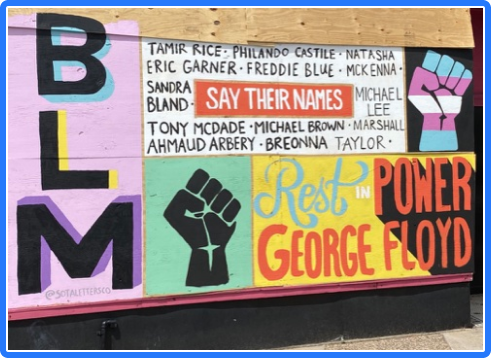
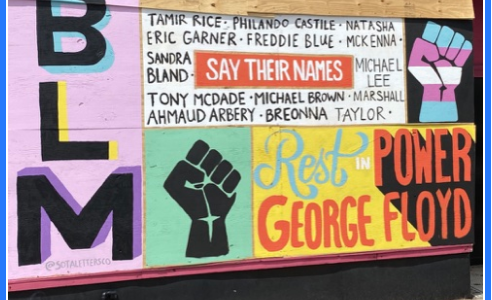

The death of George Floyd at the hands of officer Derek Chauvin, whose record of brutality
is well known, shows that years of police reform efforts to educate and retrain officers have
failed. Decade after decade, the so-called bad apples remain in abundance on the
Minneapolis police force. Systematic brutality, harassment and killing goes unabated.
It appears it’s police officers who control the police, not the City Council, not the mayor and
not the police chief. If they did, officers like Chauvin would long ago have been terminated.
It is time elected officials admit what is common knowledge in the community; they are not
in control of the police. If city officials are serious they must take actions to clean out the
MPD.
Few officers disciplined
The black community is well aware of the extent of this infection. They experience it daily.
As the record of Chauvin illustrates, their firsthand knowledge is routinely ignored. A
measure of the lack of accountability is data that shows since 2012, individuals filed 2,600
misconduct complaints against MPD officers, yet only 12 officers were disciplined.
At a press conference on May 31, St. Paul Mayor Melvin Carter mentioned the legal and
legislative roadblocks long in the way of meaningful change in policing. These include police
union contracts and state and federal laws limiting the legal parameters available to extend
community control over policing. Clearly the steps advocated here would require substantial
revisions of existing law and contracts; however, they offer a constructive platform for
further discussion.
Carter and Minneapolis Mayor Jacob Frey both said that Minnesota cannot allow another
death like that of George Floyd. If not, they warn our community would likely suffer through
another rebellion and more violence. As is evident in the demands emanating from the
protesters and community leaders, this must begin with convictions in the death of George
Floyd.
Some 40 years ago, black activists raised the demand for community control of policing
practices and those who patrol their communities. A model developed by Chicago activists
and political leaders offers a detailed account of how community control could function.
Briefly defined, community control means active citizen involvement in the policies, hiring
and oversight of police. As a friend of mine says, black taxpayers are paying for a law
enforcement system that acts as an oppressor in their own community.
All officers should have to reapply
In Minneapolis, once the roadblocks are removed, meaningful change must begin with an
agreement that all current police officers reapply for their jobs. Those who have committed
acts of brutality should not be rehired. Community members will sit on interview boards and
review officers’ records in cooperation with legal input, law enforcement personnel and
experts from outside the department and MPD officials.
In a community-based hiring process, final hiring authority
and disciplinary actions should be weighted in favor of the
community, with a provision for appeal to ensure due
process.
Existing hiring procedures across the nation typically fall
under the sole jurisdiction of law enforcement officials. In
some locations, community members play an advisory role,
but lack any authority. The recruitment process is largely selfselective,
in that individuals who want to become law
enforcement officers simply enroll in an accredited academic
program. Depending on the state, there may be some checkpoints along the way for
psychological fitness, but given the routine, persistent levels of police brutality and
harassment, these are clearly ineffective.
Dustin Schwarze and Mark Ringgenberg, those involved in the 2015 killing of Jamar Clark,
had a record of overzealous policing and/or profiling while employed by other police
departments, yet were hired by Minneapolis. A hiring committee that includes black
residents would likely have rejected their applications.
Start afresh
Steps toward community control of police:
1. Terminate all officers who have committed acts of police brutality that resulted in the
city paying settlements to plaintiffs. Provide severance and education benefits for them
to pursue other work.
2. Officers reapplying who do not meet rehiring criteria, yet deserve a second chance,
would receive additional training and education, work with community mentors and
then be re-evaluated before a final hiring offer is made.
3. Review all policing practices, training and protocols with community members. Make
changes as needed and evaluate in collaboration with officers on a regular basis.
4. Embrace a public safety beyond policing model that employs far fewer armed officers
and shift resources into hiring social workers, conflict resolution experts and youth
outreach organizers that do not report to the MPD. Start by shifting 5 percent of the
budget annually.
5. Provide seamless transition to drug treatment and other rehabilitative needs in order to
avoid arresting and incarcerating nonviolent offenders.
6. Establish a rigorous truth and reconciliation process with communities and families
affected by police brutality, profiling and harassment.
The goal of moving toward community control is to create a relationship between officers
and citizens that leads to safer neighborhoods, less crime and more rewarding work for law
enforcement officers. The rehiring process advocated here, in itself, offers a truth and
reconciliation process during the interview, retraining and probationary periods.
In light of the public outcry over the ongoing incidents of officers killing unarmed African-
Americans and other people of color around the nation and in the Twin Cities, it is difficult
to imagine any other route to fair policing and safer neighborhoods.
Wayne Nealis is a writer and longtime peace and labor activist living in Minneapolis.
First published on Minnpost.com, June 3, 2020. https://www.minnpost.com/community-voices/2020/06/community-control-of-police-an-idea-whose-time-has-come/